Apple Valley · Mojave High Desert
Sixteen kilowatts of glass, thirty-one kilowatt-hours of lithium, and no wire running to the road.
Conditions · live
UV index and irradiance · today
Live from the Open-Meteo forecast API — no key, no account, refreshed each time the page loads. Full NWS forecast for Apple Valley.
Plant status
Four stages carry the load. The profile below is the shape of a clear summer day — what the array could make, what the inverter is able to pass, and what the house actually draws.
Clear-day power profile
Against rated limits
Plant figures are a static snapshot. Every value is held in a single PLANT object and can be swapped for a polled feed without touching the markup.
Generation
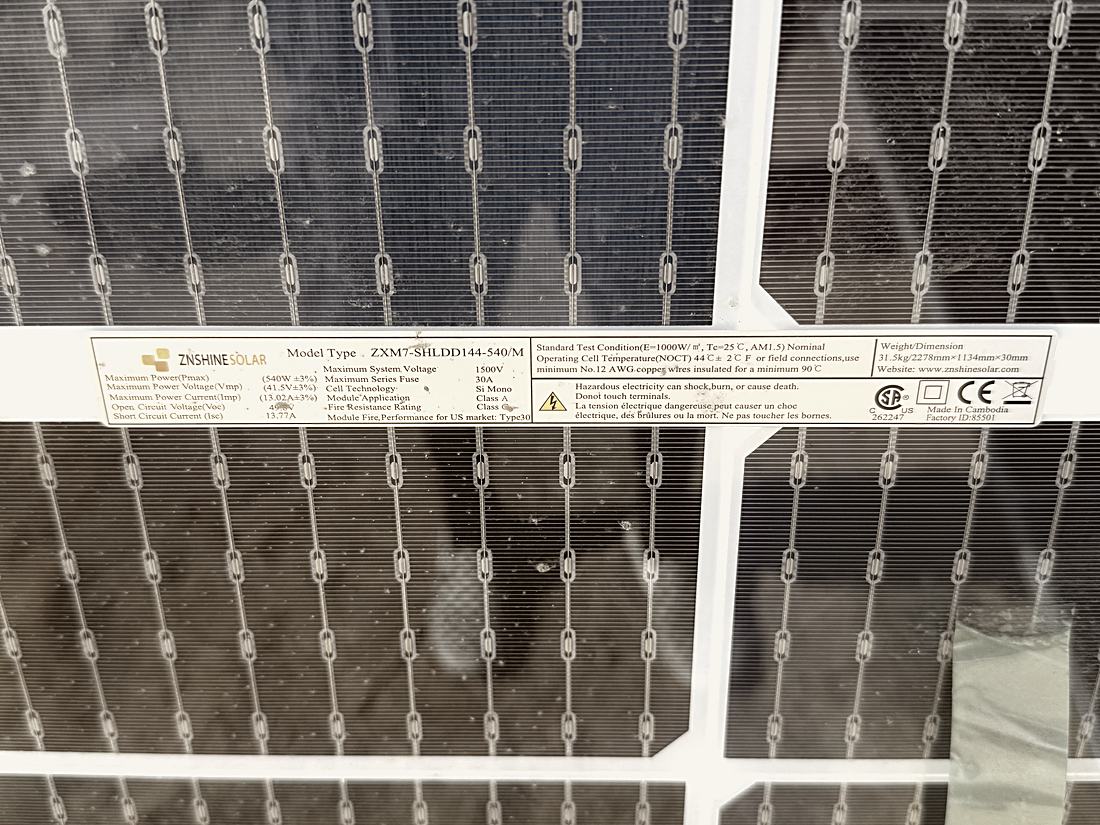
Seven in series rather than five is a decision about watts per amp. The tracker limits current, never voltage, so a taller string puts forty per cent more power behind the same thirteen amps — reaching the ceiling earlier and holding it later.
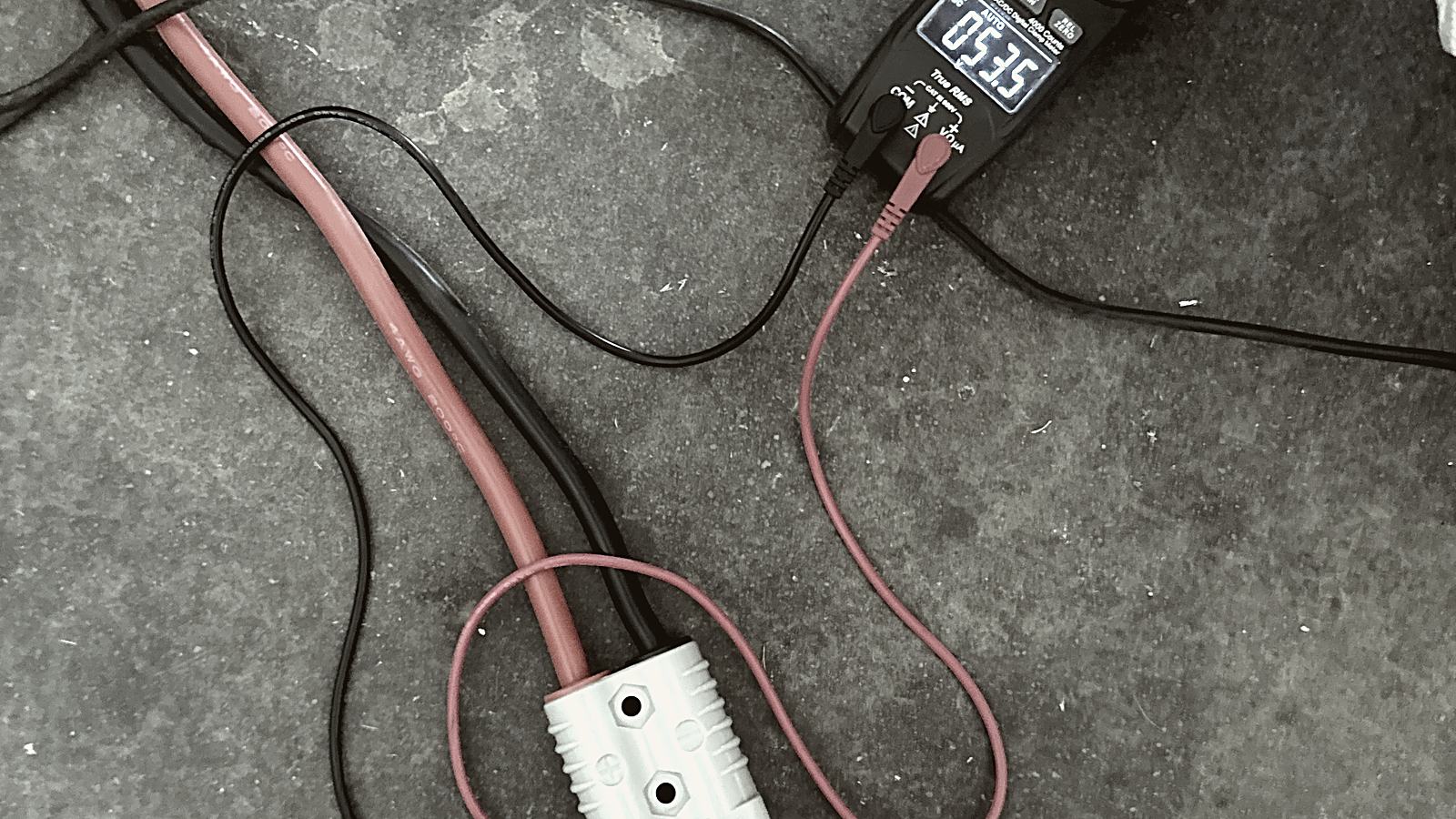
Meter verified against a known-good unit before the reading was trusted.
Conversion
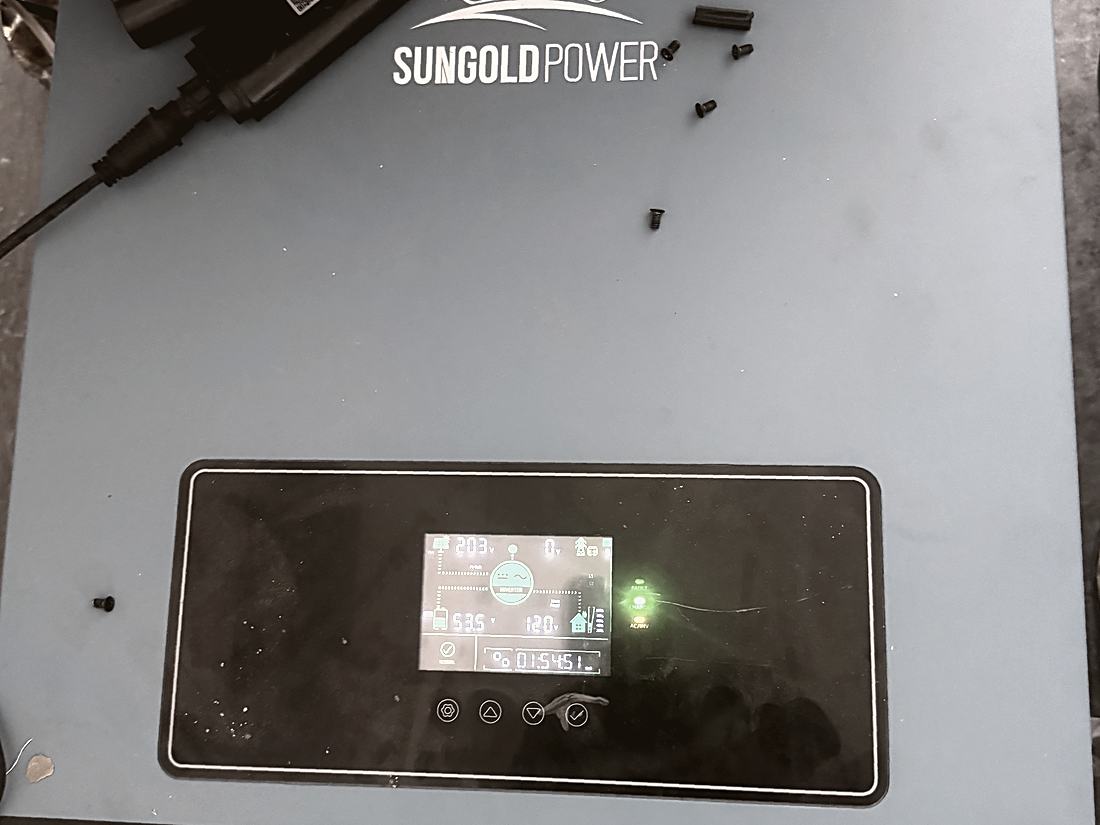
Ten kilowatts of split phase, two trackers, a two hundred amp charger. It is also the tightest constraint on the property — eleven kilowatts of input against sixteen of glass.
Combining
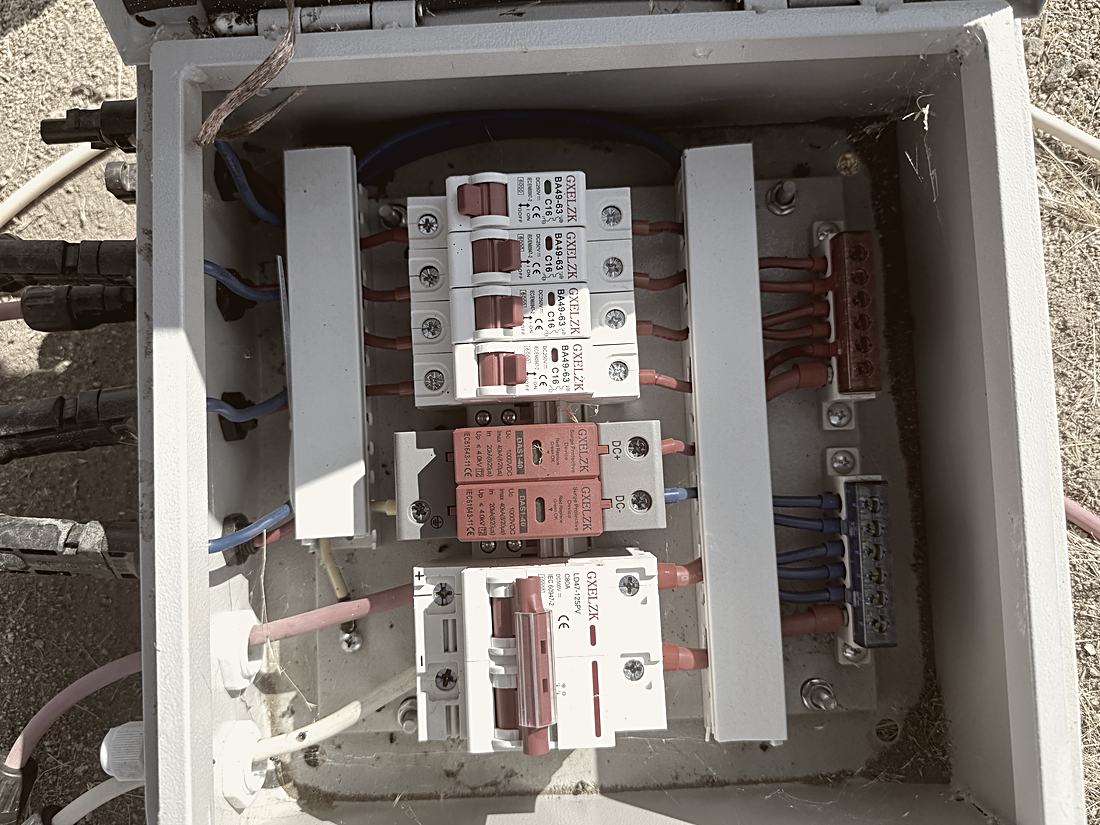
Each sub-array feeds its own tracker and never meets the other. The manual is explicit: PV1 and PV2 stay independent, and so must the arrays of any two inverters run in parallel.
Storage
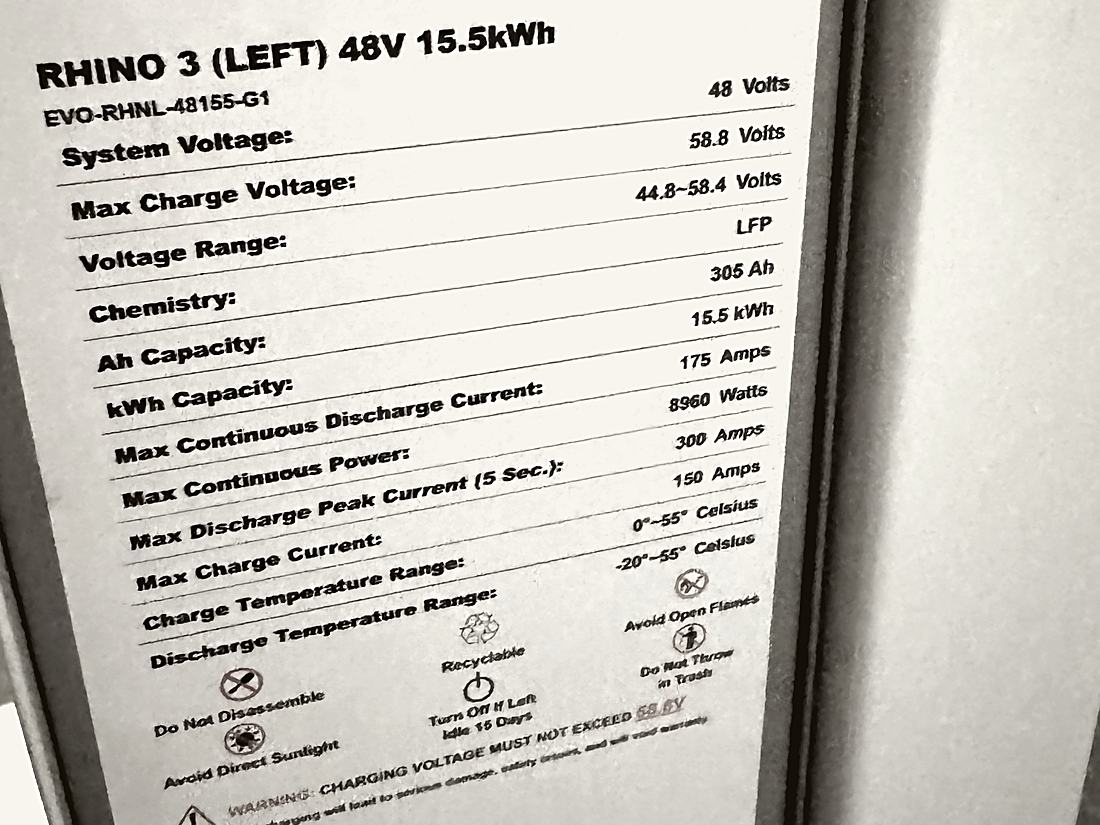
Three hundred and fifty amps of discharge behind a two hundred and twenty amp inverter. The bank is oversized for the machine in front of it, which is the correct way round — it will outlast everything else here.
Unit three
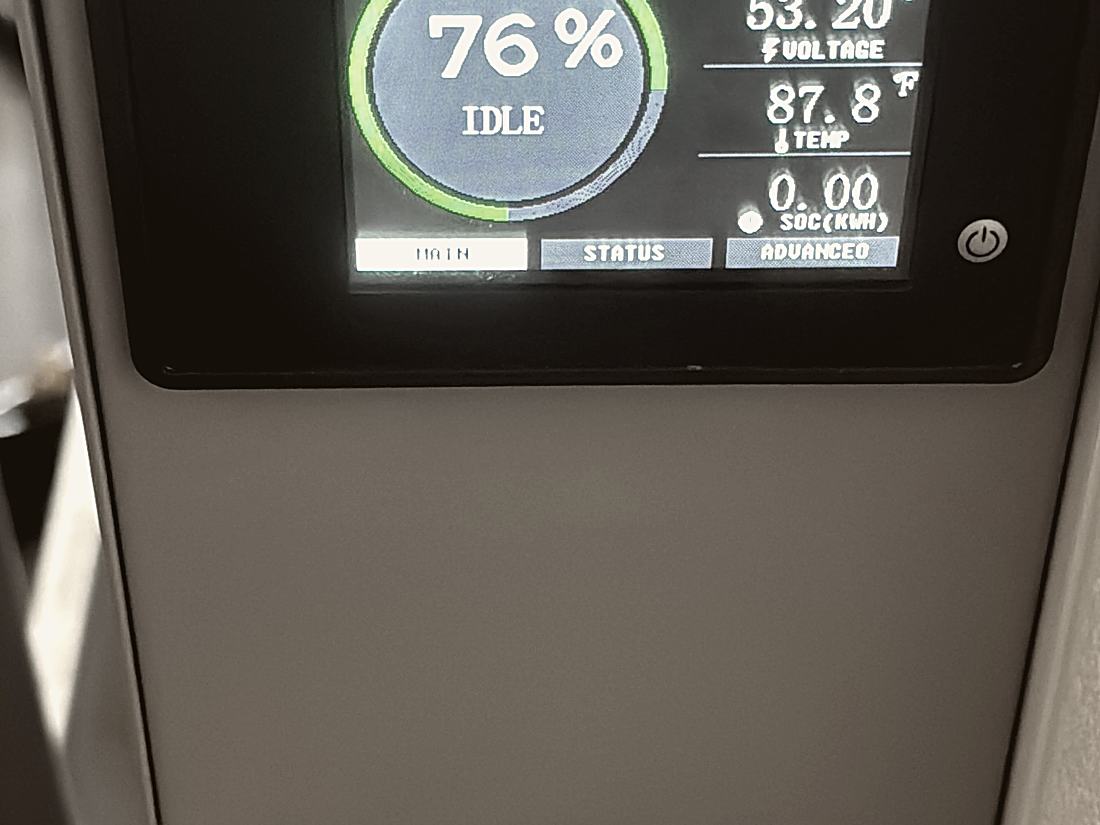
Fifteen and a half kilowatt-hours holding at seventy-six per cent, reporting no fault, passing nothing. The manufacturer is in bankruptcy, so every step below was owner-diagnosed.
53.20 V internal, steady, no drain. Cells are sound.
All sixteen channels report exactly 3300 mV — not a real measurement.
Both FET banks commanded on. No protection flags. Temperatures sensible.
0.00 V at the Anderson, against 53.75 V on a working pack.
No pack appears to the app. The single UART feeds the display; there is no radio.
Check the 300 A fuse, isolate the FET board stack-negative to output-negative, inspect every lug and connector pin.
The board is a BatteryEVO-badged JBD-AP20S006 — an off-the-shelf part. A 16S 200 A replacement runs $100–200 and reuses the cell stack.
The arithmetic
Summer clipping is real and harmless — eighty-eight kilowatt-hours cannot be spent when only sixty-two are wanted. Seasonal tilt on a ground mount typically returns fifteen to twenty-five per cent in December.
As configured
The inverter enforces a voltage ladder — [15] < [12] < [04] < [14] < [35] < [37] < [05] < [09/11]. Any profile change that breaks the chain is silently refused.
Sun in, lithium between, house on the far side.
Still to do
A second inverter is not on this list. A parallel unit needs its own independent array — fourteen more modules bought to gain AC capacity that a 4.3 kW peak will never ask for.
Standing orders
Three hundred and five amp-hours of paralleled LFP with no fusing between cells. At fifty-three volts the hazard is not shock — it is a bolted fault across the busbars. One hand in the box. Tape the shanks. Metal off the wrists.
Three hundred and forty-eight volts open circuit per string, higher on a cold morning. A DC arc has no zero crossing to extinguish it. Break the combiner poles before touching a connector, and never pull one under load.